

 Facebook
 Twitter
 LinkedIn
World Motorsport Symposium 2026 round-up
This week the RACE TECH World Motorsport Symposium bought together leading figures from across motorsport at London’s Royal Automobile Club for two days to discuss the future of the sport.
Chaired by former Audi Motorsport engine development director, Ulrich Baretzky and Cadillac Formula 1 consultant, Pat Symonds, the RACE TECH-organised event which operates under a Chatham House Rule, covered hydrogen propulsion, electrification, aerodynamics, artificial intelligence and grassroots participation.
Throughout the two days, discussions centred on balancing technological progress with the financial, regulatory and environmental demands facing the industry.
Hydrogen and alternative fuels
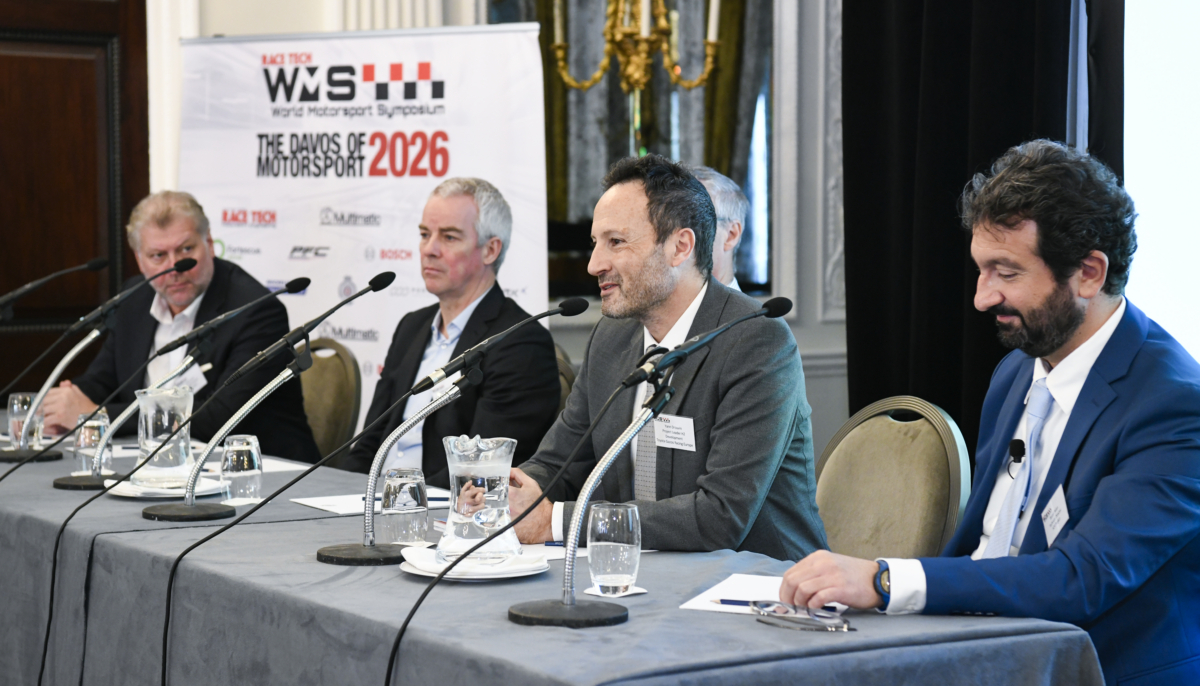
Hydrogen propulsion opened the symposium, with representatives from Toyota Racing, MissionH24 and Bosch Motorsport examining its potential in future competition.
Toyota Racing’s Yann Drouvin discussed the manufacturer’s liquid hydrogen demonstration programme at Le Mans, while MissionH24 Technical Director, Bassel Aslan, outlined development of the H24EVO prototype.
Both programmes highlighted the engineering challenges associated with hydrogen propulsion, particularly fuel storage, powertrain integration and the demands of endurance racing.
Endurance racing and electrification
The future of endurance racing was another major topic, with keynote speakers including Bruno Famin, Deputy Director in Charge of Motorsport at the Automobile Club de l’Ouest and John Doonan, IMSA President, discussing cooperation between the sport’s leading organising bodies as championships prepare for future technical regulations.
Fortescue Zero’s Douglas Campling examined solid-state batteries in motorsport, while Podium CEO, Francesco, Monti explored the physical limitations governing racing battery performance.
The accompanying panel addressed the challenges of power density, thermal management, weight and reliability as electrification continues to develop across motorsport.

Manufacturers debate motorsport’s future
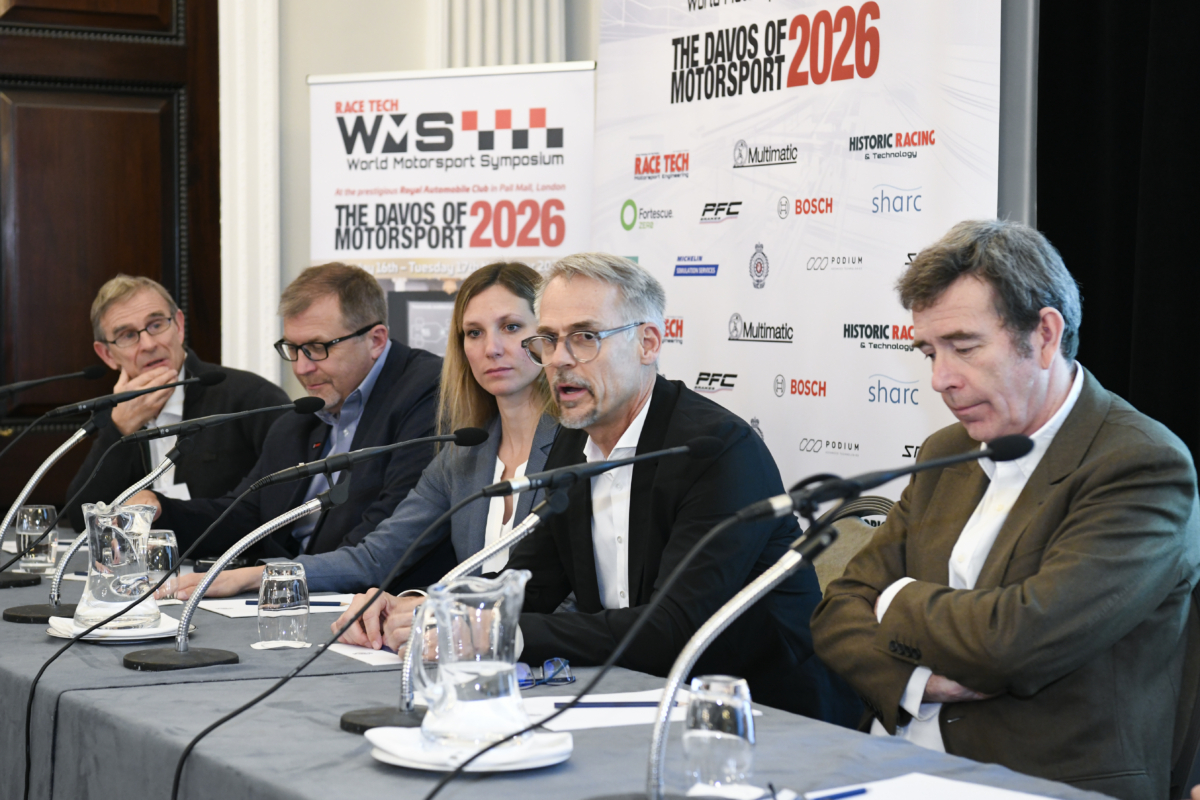
One of the highlights came during the afternoon, when senior representatives from Porsche Motorsport, Audi and Toyota Racing examined the sport’s strategic direction.
Porsche Head of Motorsport, Thomas Laudenbach, opened the session by exploring the balance between technological innovation, cost control and competitive fairness, including the role of Balance of Performance regulations.
Audi technical lead Dr Lea Schwarz followed with a presentation on motorsport’s sustainable future, before joining a panel that also featured Toyota Racing Vice President, Pascal Vasselon.
The discussion brought together different OEM perspectives on maintaining motorsport’s relevance while managing rising costs, changing technologies and the need for meaningful engineering development.
It provided a compelling examination of the decisions facing manufacturers as they balance competitive ambitions with long-term commercial and technological priorities.
Sustainable materials and powertrain innovation
Sustainability remained prominent throughout the afternoon, extending beyond powertrains to tyres and advanced materials.
Pirelli’s Matteo Battaini examined sustainable tyre development, while Michelin and Bcomp contributed to discussions on reducing motorsport’s environmental impact through materials innovation.
The technical programme concluded with powertrain and suspension engineering. Multimatic’s Executive Vice President, Special Vehicle Operations Group, Larry Holt explored ground-effect aerodynamics and active suspension, while Bosch Motorsport contributed to discussions on powertrain development.
Aerodynamics and future technologies
The FIA’s Deputy Technical Director, Dominic Harlow, FIA’s Head of Technical Audit, Marianne Hinson, Cadillac Formula 1’s Chief Engineer, Aerodynamics, Simon Dodman and John Iley of Iley Design discussed regulatory and engineering perspectives on aerodynamic development. Exploring the technical challenges facing teams as they pursue performance within increasingly complex regulations.
Artificial intelligence and simulation
Attention then shifted towards artificial intelligence and simulation, examining their growing influence on motorsport engineering.
Mistral’s Vice President, Computational Engineering, Neil Ashton explored AI applications in computational engineering, while Dodman discussed its use in aerodynamic development.
Canopy Simulations Technical Director, Alex McCormick, examined the opportunities and limitations of AI in motorsport simulation.
Together, the presentations explored how advanced computational methods could improve development efficiency while highlighting the importance of understanding their limitations.
Hydrogen technology and JCB’s record-breaking Hydromax
Hydrogen returned to the agenda beginning with Extreme H Technical Director, Mark Grain, who presented on the next steps for hydrogen technology within the championship.
The discussion provided a competition-focused introduction to the afternoon’s hydrogen programme before JCB’s Ryan Ballard presented one of the symposium’s standout engineering achievements.
Ballard took delegates through the development of the Hydromax land speed record vehicle, which achieved a two-way average speed of 406.320mph at Utah’s Bonneville Salt Flats on 11 August.
Driven by Wing Commander Andy Green OBE, the 32-foot streamliner uses two extensively modified, production-based JCB hydrogen combustion engines producing a combined 1,600bhp.
The Hydromax recorded 400.623mph on its first run and 412.135mph on its return, establishing a new hydrogen internal combustion land speed benchmark and surpassing BMW’s previous 185.5mph record from 2004.
Ballard concluded his presentation with footage of the record-breaking attempt, demonstrating hydrogen combustion technology operating at the extremes of automotive performance.
The presentations were followed by a wider discussion involving representatives from Extreme H, MissionH24, Toyota Racing and Michelin, examining different approaches to hydrogen propulsion and its potential applications.
Making motorsport accessible to the next generation
The symposium’s final afternoon shifted attention from elite-level engineering to making motorsport more accessible.
Motorsport UK’s Director, Christopher Tate, examined barriers to participation before former Formula 1 engineer Rob Smedley presented the FAT Karting League, an initiative designed to make competitive karting more affordable.
Co-founded by Smedley and Ferdi Porsche, the league uses an arrive-and-drive model, providing standardised electric karts and safety equipment without requiring families to purchase or maintain their own machinery.
Developed using Formula 1 engineering expertise, the programme combines structured coaching with data-driven assessments to identify talent and support progression.
Open to drivers aged five to 17, the league offers a pathway through regional and professional competition, with opportunities leading to a fully funded Formula 4 seat.
Having expanded into the United States, the initiative aims to make competitive karting accessible to a wider international audience.
The subsequent panel, featuring Smedley and Tate, reinforced how engineering innovation and accessible development pathways can help secure motorsport’s future.
A shared challenge for motorsport
From manufacturers debating motorsport’s strategic direction to JCB’s record-breaking hydrogen engineering and Smedley’s grassroots karting initiative, the symposium demonstrated the breadth of innovation taking place across the industry.
Despite the different technologies and challenges discussed, a common objective emerged: ensuring motorsport remains a platform for engineering development while becoming more sustainable, commercially viable and accessible to future generations.
Read about the World Motorsport Symposium Awards hereRed Bull Ford Powertrains, Toyota, Lifeline and Michelin win at WMS